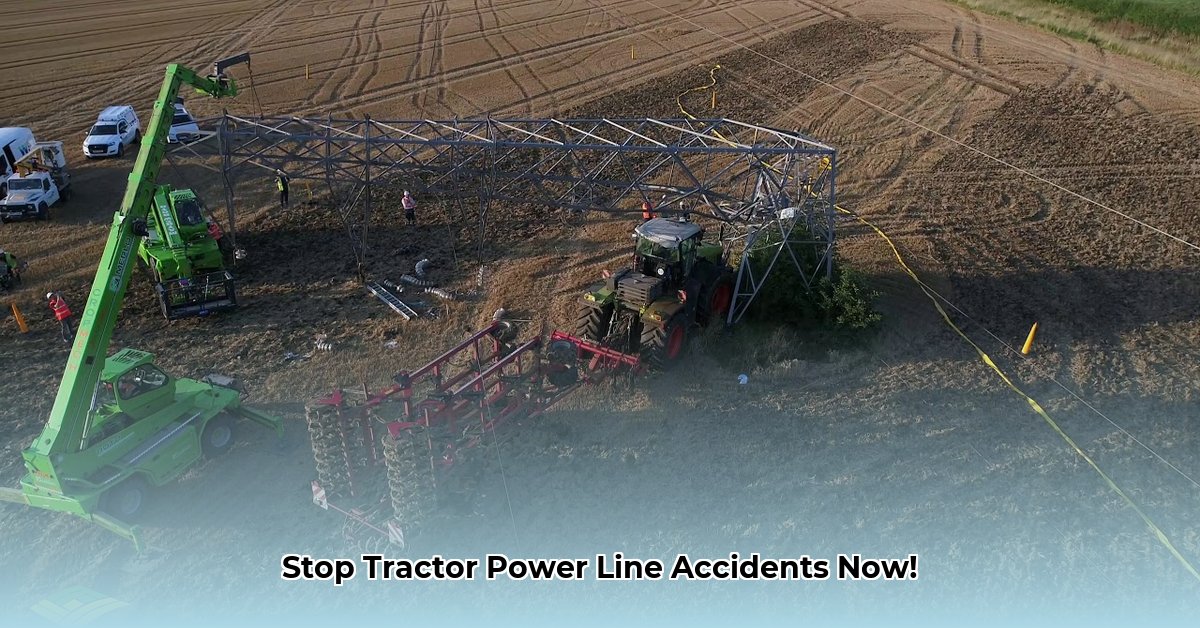
Farming demands long hours and careful planning, but a significant, often overlooked, danger lurks: power lines. Accidents involving farm equipment and power lines can lead to serious injuries, extensive property damage, and costly power outages. This article provides a comprehensive guide to preventing tractor-power line incidents, offering actionable steps for farmers, utility companies, and government agencies.
Understanding the Dangers of Tractor-Power Line Contact
Contact between a tractor and a power line can have devastating consequences, ranging from minor equipment damage to severe electrical shock resulting in serious injury or fatality. Beyond the immediate human risk, power outages can disrupt entire communities, highlighting the far-reaching impact of these incidents. These are not isolated events; they underscore the inherent risks of operating heavy machinery near high-voltage lines.
Planning Your Route: The First Line of Defense
Proactive route planning is crucial. Before operating any equipment, utilize online mapping tools (many utility companies offer free resources) that pinpoint power line locations. While digital maps are helpful, always conduct a thorough visual inspection of your fields to identify power lines. Familiarize yourself with the terrain and precise locations of power lines; this vigilance is paramount to safety.
Communication: Fostering Collaboration Between Farmers and Utility Companies
Open communication between farmers and utility companies is essential. Utility providers should proactively share clear, accessible information on power line locations and safety guidelines. This goes beyond simple pamphlets; it requires a collaborative partnership built on mutual respect and shared responsibility for safety. Regular updates and easily accessible online resources are vital for keeping everyone informed.
Power Up Your Safety Training: Knowledge is Key
Thorough safety training focused on electrical hazards is non-negotiable. Agricultural extension programs and farm safety organizations should offer comprehensive, hands-on training, including practical demonstrations and real-world scenarios. Regular refresher courses are crucial for maintaining safety awareness.
Technology's Role in Enhancing Farm Safety
Smart grid technologies offer significant safety improvements by enabling rapid isolation of affected areas after an incident. While these technologies necessitate a longer-term investment, their contribution to overall farm safety is substantial, reducing the consequences of accidents. Continued research and development promise even safer solutions in the future.
Teamwork Makes the Dream Work (A Safer Farm)
Preventing tractor-power line incidents demands collaborative effort. Utility companies must maintain accurate, readily accessible maps and actively engage with the farming community. Government agencies should fund research on accident patterns and promote stringent safety regulations. Agricultural organizations play a vital role in raising awareness and promoting best practices. This combined approach ensures a safer working environment.
Actionable Steps You Can Take Today
- Meticulous Route Planning: Use online mapping tools and conduct thorough visual inspections before fieldwork commences.
- Establish Open Communication: Contact your local utility company to discuss safety protocols and power line locations.
- Invest in Comprehensive Training: Participate in safety training programs and stay updated on electrical safety procedures. Regular refresher courses reinforce best practices.
- Report Near Misses: Reporting near-miss incidents provides invaluable data for improving future safety initiatives.
Understanding the Risks: A Detailed Risk Assessment
The table below summarizes potential risks, their likelihood, severity, and recommended mitigation strategies. Remember that your specific risks will vary depending on location and operations.
| Risk Factor | Likelihood | Severity | Risk Level | Mitigation Strategy |
|---|---|---|---|---|
| Equipment Contacting Power Lines | Likely | High | High | Improved route planning, operator training, enhanced mapping tools, and increased awareness |
| Inadequate Safety Training | Moderate | Moderate | Moderate | Mandatory training programs for farmers, readily accessible online safety resources and refresher courses |
| Power Outage Impact | Unlikely | High | Medium | Smart grid technologies, improved grid resilience and redundancy, backup power systems |
| Lack of Reporting | Possible | Low | Low | Incentives for reporting near-miss incidents, simple and accessible reporting mechanisms |
How to Prevent Agricultural Equipment Accidents Near Power Lines in Canada
The increasing size of modern farm equipment heightens the risk of power line contact. This necessitates a multi-pronged approach involving farmers, utility companies, and regulatory bodies.
Prioritizing Safety: Key Strategies
- Comprehensive Planning: Carefully map power line locations before fieldwork using GPS technology and detailed maps.
- Maintaining Safe Distances: Always maintain a safe distance from power lines, erring on the side of caution.
- Regular Safety Training: Regular safety training for farmworkers is crucial to ensure everyone understands risks and procedures.
- Open Communication: Farmers and utility companies must maintain open communication channels for reporting damaged lines.
- Utilizing Technology: Invest in GPS systems with power line mapping capabilities.
- Regulatory Compliance: Adhere to all Canadian safety regulations and guidelines.
Practical Steps for Safer Farming in Canada
- Pre-harvest Planning: Utilize GPS mapping to precisely plot power lines.
- Equipment Assessment: Evaluate equipment height and reach to avoid contact with power lines.
- Safe Operation Practices: Employ spotters when working near power lines and maintain safe distances.
- Clear Communication Protocols: Establish clear communication among workers regarding power line locations and procedures.
- Emergency Procedures: Develop and practice emergency procedures for power line incidents.
The Role of Technology in Canada
GPS-enabled machinery and early warning systems can significantly improve situational awareness and alert operators to potential hazards. Investing in such technologies is crucial for enhancing farm safety.
Collaborative Efforts are Key
Effective solutions require collaboration between farmers, utility companies, and government agencies to establish safer working conditions for Canadian agriculture. The shared responsibility for safety is paramount.